BATCH GGH7T324 53%
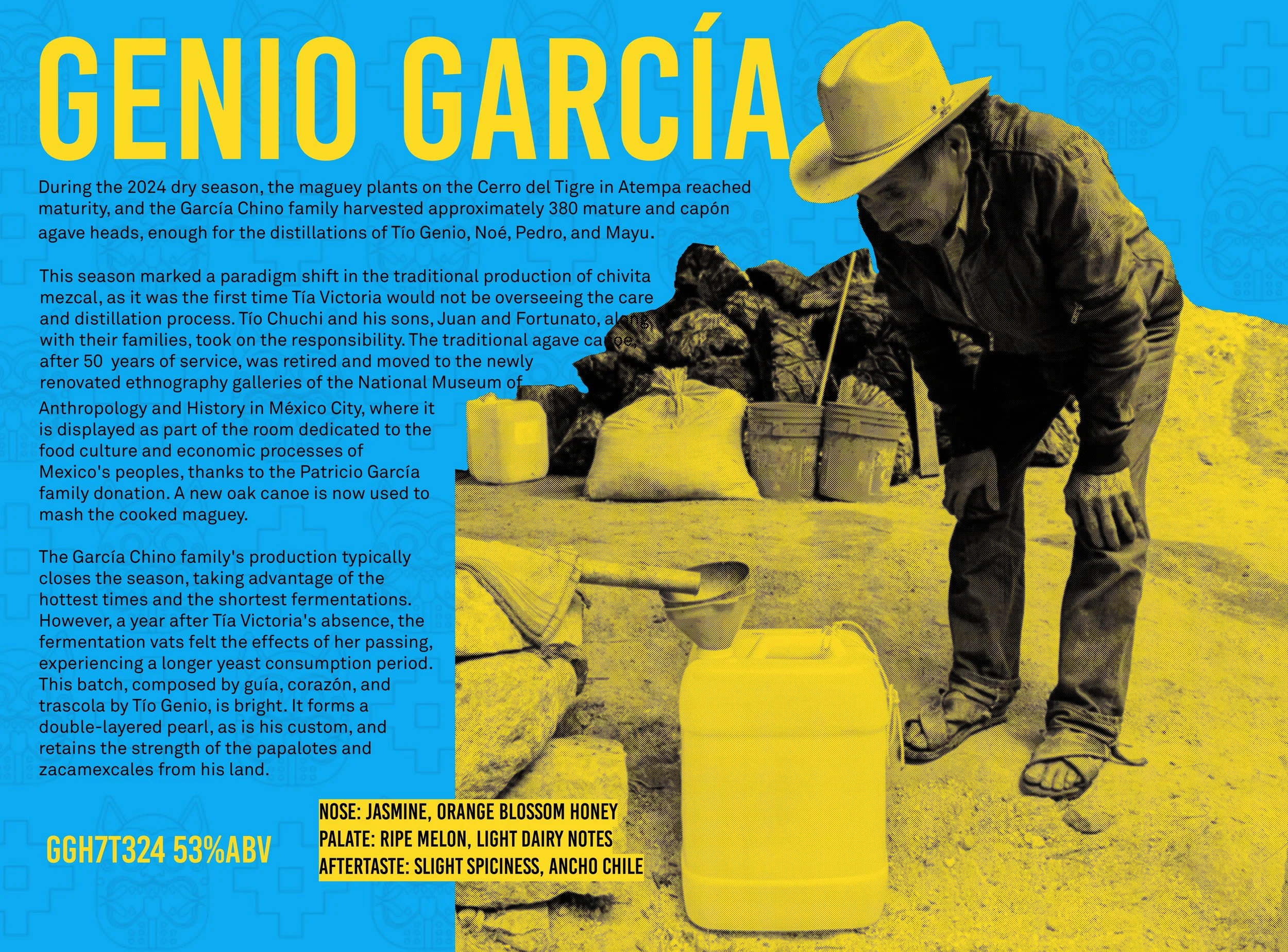
During the 2024 dry season, the maguey plants on the Cerro del Tigre in Atempa reached maturity, and the García Chino family harvested approximately 380 mature and capón agave heads, enough for the distillations of Tío Genio, Noé, Pedro, and Mayu.
This season marked a paradigm shift in the traditional production of chivita mezcal, as it was the first time Tía Victoria would not be overseeing the care and distillation process. Tío Chuchi and his sons, Juan and Fortunato, along with their families, took on the responsibility. The traditional agave canoe, after 50 years of service, was retired and moved to the newly renovated ethnography galleries of the National Museum of Anthropology and History in México City, where it is displayed as part of the room dedicated to the food culture and economic processes of Mexico's peoples, thanks to the Patricio García family donation. A new oak canoe is now used to mash the cooked maguey.
The García Chino family's production typically closes the season, taking advantage of the hottest times and the shortest fermentations. However, a year after Tía Victoria's absence, the fermentation vats felt the effects of her passing, experiencing a longer yeast consumption period.
This batch, composed by guía, corazón, and trascola by Tío Genio, is bright. It forms a double-layered pearl, as is his custom, and retains the strength of the papalotes and zacamexcales from his land.
Nose: jasmine, orange blossom honey
Palate: ripe melon, light dairy notes
Aftertaste: slight spiciness, ancho chile
El Tigre
Damian and Raquel, the founders of El Tigre, officially started the project in 2011, but the roots date back to the early 2000s, when Damian's tío Chimino, an accomplished magueyero (agave farmer) first introduced him to the Patricio García family, and Damian, who had grown up in Mexico City and Detroit, began developing a greater interest in the culture of his family’s ancestral home in Atempa-Xulchuchio, Guerrero.
Since then, the couple have hosted mezcal tastings in their home in Mexico City as way of spreading Atempa’s culture of mezcal, while using the proceeds to help support and preserve the web of agricultural and artisan communities that all play important parts in Atempa’s traditional social, religious and economic systems.
More info on mezcalmalbien.com
BATCH GGH7T324 53%
During the 2024 dry season, the maguey plants on the Cerro del Tigre in Atempa reached maturity, and the García Chino family harvested approximately 380 mature and capón agave heads, enough for the distillations of Tío Genio, Noé, Pedro, and Mayu.
This season marked a paradigm shift in the traditional production of chivita mezcal, as it was the first time Tía Victoria would not be overseeing the care and distillation process. Tío Chuchi and his sons, Juan and Fortunato, along with their families, took on the responsibility. The traditional agave canoe, after 50 years of service, was retired and moved to the newly renovated ethnography galleries of the National Museum of Anthropology and History in México City, where it is displayed as part of the room dedicated to the food culture and economic processes of Mexico's peoples, thanks to the Patricio García family donation. A new oak canoe is now used to mash the cooked maguey.
The García Chino family's production typically closes the season, taking advantage of the hottest times and the shortest fermentations. However, a year after Tía Victoria's absence, the fermentation vats felt the effects of her passing, experiencing a longer yeast consumption period.
This batch, composed by guía, corazón, and trascola by Tío Genio, is bright. It forms a double-layered pearl, as is his custom, and retains the strength of the papalotes and zacamexcales from his land.
Nose: jasmine, orange blossom honey
Palate: ripe melon, light dairy notes
Aftertaste: slight spiciness, ancho chile
El Tigre
Damian and Raquel, the founders of El Tigre, officially started the project in 2011, but the roots date back to the early 2000s, when Damian's tío Chimino, an accomplished magueyero (agave farmer) first introduced him to the Patricio García family, and Damian, who had grown up in Mexico City and Detroit, began developing a greater interest in the culture of his family’s ancestral home in Atempa-Xulchuchio, Guerrero.
Since then, the couple have hosted mezcal tastings in their home in Mexico City as way of spreading Atempa’s culture of mezcal, while using the proceeds to help support and preserve the web of agricultural and artisan communities that all play important parts in Atempa’s traditional social, religious and economic systems.
More info on mezcalmalbien.com